 Making ads
Nano Banana 2.1: What's New, Pricing and What It Means for Ads
Nano Banana 2.1 is Google's new image model: half the price of Nano Banana 2, better text in images and mask-based editing. What it means for your ads.


Written by Genly's AI team, reviewed by Marlon Bonink
· 5 min read

On October 6, 2026, Google released Nano Banana 2.1, the successor to Nano Banana 2. The model generates and edits images, is rolling out in AI Mode in Google Search, and is available right away as a stable model in the Gemini API. For anyone making ads, two things matter most: an image costs roughly half as much through the API, and Nano Banana 2 shuts down on October 29, 2026. Here is what actually changed, what it costs and what to do with it.
Short answer: Nano Banana 2.1 is Google's newest model for generating and editing images. According to Google it beats its earlier models, especially in visual design, mask-based editing and keeping a product or person consistent. In the Gemini API a 1K image costs $0.0336, half the price of Nano Banana 2. If you use Nano Banana 2 through the API, switch before October 29, 2026, when that model shuts down.
What is Nano Banana 2.1?
Nano Banana is the nickname for the image models in Gemini, Google's AI. Google calls version 2.1 its "latest image generation and editing model". At launch Google said it "outperforms our previous models across the board, with notable leaps in visual design, mask-based editing, and subject consistency".
You can find it in two places today:
- AI Mode in Google Search. The model is rolling out in AI Mode. In the Google app you open it through the banana icon below the search box. Robby Stein, VP of Product for Google Search, confirmed the rollout.
- The Gemini API. For developers and tools it is available right away as a stable model, under the name
gemini-nano-banana-2.1.
What's new compared with Nano Banana 2?
In its documentation Google describes Nano Banana 2.1 as a model "with improved visual quality, typography, and multi-turn consistency". Side by side:
| Nano Banana 2 | Nano Banana 2.1 | |
|---|---|---|
| API model name | gemini-3.1-flash-image | gemini-nano-banana-2.1 |
| Price per 1K image | $0.067 | $0.0336 |
| Price per 2K image | $0.101 | $0.0504 |
| Price per 4K image | $0.151 | $0.0756 |
| Smallest size | 0.5K (512 px) | 1K |
| Shutdown | October 29, 2026 | New, successor to Nano Banana 2 |
According to Google's documentation, Nano Banana 2.1 can also:
- Render text in images: legible, stylized text for infographics, menus, diagrams and marketing assets.
- Use reference images: up to 10 images of objects and up to 4 images of characters to keep them recognizable.
- Edit over multiple turns: refine an image step by step in a conversation.
- Ground with Google: use Google Search and Google Image Search to inform an image.
- Think before generating: at three levels (minimal, medium, high), with medium as the default.
Every image carries an invisible SynthID watermark that identifies it as AI-generated.
What does Nano Banana 2.1 cost?
In AI Mode you simply use it in Google Search. Through the Gemini API you pay per image, with no free tier:
| Size | Standard | Batch (processed within a day) |
|---|---|---|
| 1K | $0.0336 | $0.0168 |
| 2K | $0.0504 | $0.0252 |
| 4K | $0.0756 | $0.0378 |
Source: the Gemini API pricing page. For comparison, Nano Banana Pro costs $0.134 per 1K or 2K image, so for the same money you get roughly four times as many 1K images with 2.1.
What does this mean for your ads?
More variations for the same money. In advertising the winner is not the prettiest image but the best variation in a test. Half the price per image means twice as many variations for the same budget.
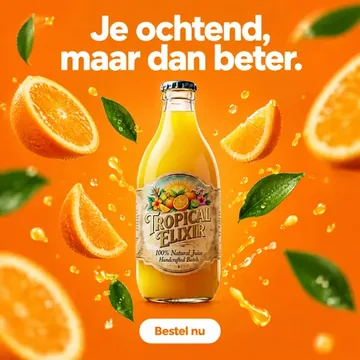
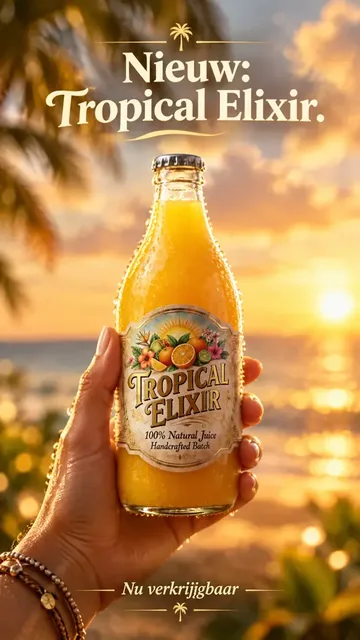
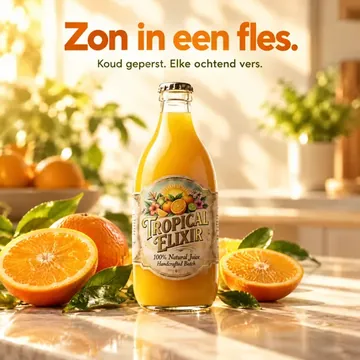
Text in images. Prices, discounts and headlines inside the ad are exactly where AI images tend to fail. Google lists typography as an improvement. Still, always check non-English text letter by letter.
Mask-based editing. Change one part of an image, like the background or the label, and keep the rest. Useful for turning one winning ad into ten variations.
The same product or person across a series. Better consistency helps when you build a set of ads where your product or person must stay recognizable.
For how the Nano Banana family compares with other image models, see our guides on Nano Banana 2 and GPT Image 2.5.
Using Nano Banana 2 through the API? Here is what to do
Google shuts down gemini-3.1-flash-image on October 29, 2026 and names Nano Banana 2.1 as the replacement. To switch:
- Replace the model name with
gemini-nano-banana-2.1. - Using 0.5K? That size does not exist in 2.1. Use 1K instead: at $0.0336 it is even cheaper than 0.5K on Nano Banana 2 ($0.045).
- Retest your standard prompts, especially prompts with text in the image, before running them at scale.
Nano Banana in Genly
In Genly you create static ads with models including Nano Banana and GPT Image 2.5, in your own brand style. Paste your website, Genly picks up your brand and creates the ads in the right sizes. Which models are in Genly right now and what they cost in credits is covered in our Nano Banana 2 guide. Ready to start? See our plans.
Frequently asked questions
Is Nano Banana 2.1 free?
You can try it as a user in AI Mode in Google Search. Through the Gemini API you pay per image; there is no free tier. A 1K image costs $0.0336.
What is the model name of Nano Banana 2.1?
In the Gemini API the model is called gemini-nano-banana-2.1. It launched directly as a stable model.
Does Nano Banana 2 still work?
Yes, until October 29, 2026. After that, gemini-3.1-flash-image shuts down in the Gemini API and Google points to Nano Banana 2.1.
Do Nano Banana 2.1 images have a watermark?
Yes. Every image carries an invisible SynthID watermark. If you use realistic images of people in an ad, disclose yourself that they were made with AI as well.
Editor
Marlon Bonink
Co-founder of Genly
This article was written by Genly's AI team and reviewed by Marlon before it went live. How we work with AI: AI transparency.