
 Advertising on Meta
Solar and Heat Pump Lead Generation with Facebook Ads
Solar and heat pump lead generation: buy leads or run your own Facebook ads? Audience, offer, 8 ad ideas, a budget rule of thumb and the rules for 2026.


Written by Genly's AI team, reviewed by Marlon Bonink
· 10 min read

If you install solar panels, heat pumps or insulation, you've watched the market shift fast. In the Netherlands, net metering ends on 1 January 2027, residential solar demand has dropped, and home batteries and heat pumps are on the rise. Many installers buy leads. This guide explains when that makes sense, and how to generate your own exclusive leads with Facebook and Instagram ads, without misleading savings claims.
Short answer: Bought solar and heat pump leads are quick, but they may be sold to several installers at once. Leads from your own Facebook and Instagram ads are exclusive, and you control the questions and the follow-up. Target homeowners in your service area, sell a first step (a home energy check, or a check of what the end of net metering means for your panels) and only mention subsidies with the official conditions. Optimise for cost per signed job, not cost per lead.
What makes solar and heat pump leads harder in 2026?
The Dutch market is a good example of how quickly things move:
- Net metering ends. From 1 January 2027, Dutch households can no longer offset exported solar power against their usage. Until 2030 they get a feed-in payment of at least 50 percent of the bare supply tariff (Dutch government).
- Residential solar is shrinking. In 2024, 70 percent of new panel capacity went to businesses and only 30 percent to homes (Statistics Netherlands, CBS). In Google Trends for the Netherlands, search interest in solar panels in 2026 is about two thirds lower than in 2022.
- Batteries and heat pumps are growing. In the same data, interest in home batteries has more than doubled since 2025 and is almost as high as for solar panels. Heat pumps are up about 30 percent on last year (January to September compared each time).
- Lots of confusion. Dutch homeowners search for "hybrid heat pump mandatory 2026" and "2029". The 2026 requirement was dropped; the new cabinet wants a standard from 2029 when a boiler is replaced, but that isn't law yet (Installatie.nl). Installers who explain it honestly earn trust.
- Crowded market. The Dutch installation sector counts 46,420 companies, 38,120 of them self-employed (Techniek Nederland, 2024).
Add the usual hurdles: big tickets, long decisions, and homeowners wary after stories about pushy salespeople.
Buy leads or generate your own with ads?

Search suggestions around "solar leads" and "heat pump leads" are dominated by buying: "solar leads for sale", "buy heat pump leads". Buying is fast, but it isn't your only option:
| Option | Exclusive? | Who sets questions and quality | Watch out for |
|---|---|---|---|
| Shared bought leads | No, often several installers | The vendor | You compete on price and call speed |
| Exclusive bought leads | Yes | The vendor | Higher price per lead; ask how consent was recorded |
| Your own Meta ads | Yes | You | Takes a few weeks of learning and some skill |
| Google Ads | Yes | You | Only reaches people already searching; you pay per click |
| Outsourcing (agency, Genly Leads) | Yes | Shared | Monthly fee on top of your ad budget |
Meta works well for home energy upgrades because you reach homeowners before they start searching. In the Netherlands, Facebook has 9.9 million users and Instagram 8.9 million (Newcom 2026, via Frankwatching). For emergencies, like a broken boiler, Google is stronger. TikTok (4.7 million Dutch users) is better for visibility and for recruiting technicians.
The approach: audience, offer and follow-up
1. Target homeowners in your service area
Tenants rarely decide on a heat pump, and subsidies like the Dutch ISDE for households are for homeowners. Target homeowners within a radius your crews can cover, and run separate campaigns for solar plus battery, heat pumps and insulation: different pain, different message.
2. Sell a first step, not a product
Nobody buys a heat pump from an ad. People do book a home heating check, a review of what the end of net metering means for their panels, or a crawl space inspection. That's low-risk and gets you a conversation.
3. Qualify inside the form
Use a Meta instant form with the "higher intent" type: it adds a review screen, so you get fewer leads from idle taps. Ask about owner or tenant, year of construction, current heating, postcode and timing. Link to your privacy policy.
4. Follow up the same day
A homeowner who asks you for a quote today is often asking others too. Call the same day and book the visit on the spot.
5. Plan around the seasons
In Dutch Google Trends, heat pumps and insulation peak in November, January and February, and solar in February and May. Summer is quieter. Start heating campaigns in September or October so they're up to speed when it gets cold.
8 ad ideas and hooks for installers
| Angle | Example headline | Product | Best format |
|---|---|---|---|
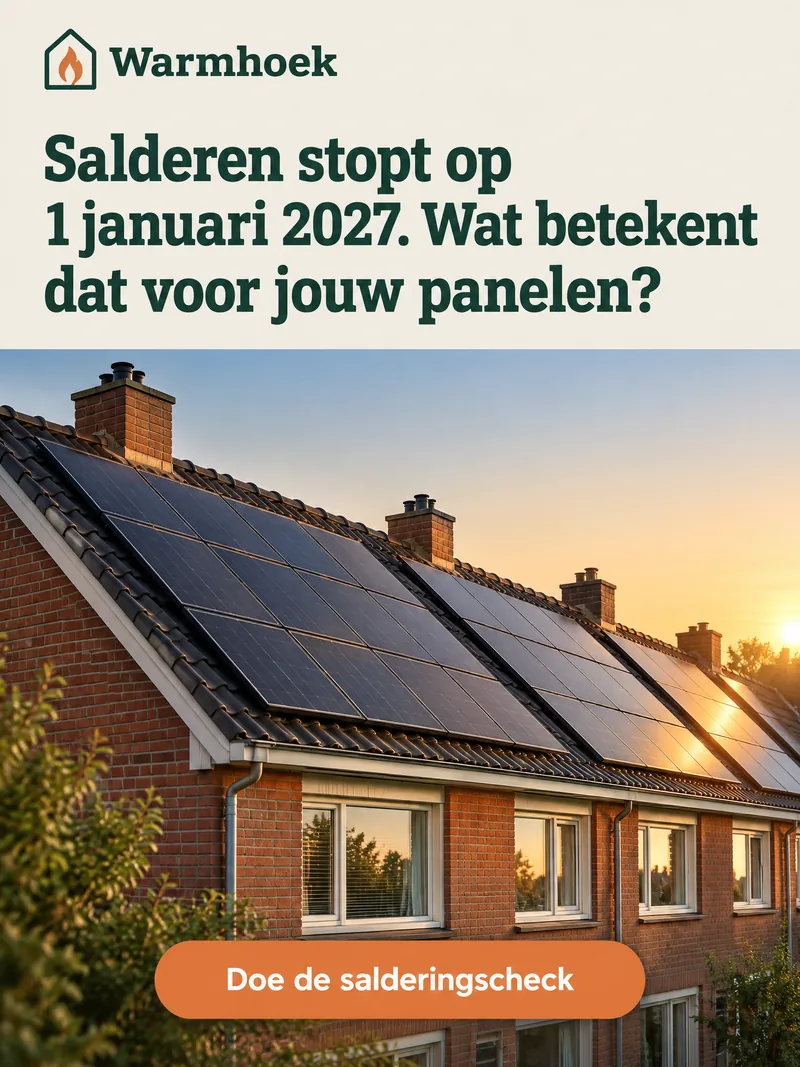
| Policy change | "Net metering ends on 1 January 2027. What does that mean for your panels?" | Solar, battery | Static |
| Honest advice | "A home battery: when it makes sense, and when it doesn't." | Battery | Video with an AI presenter |
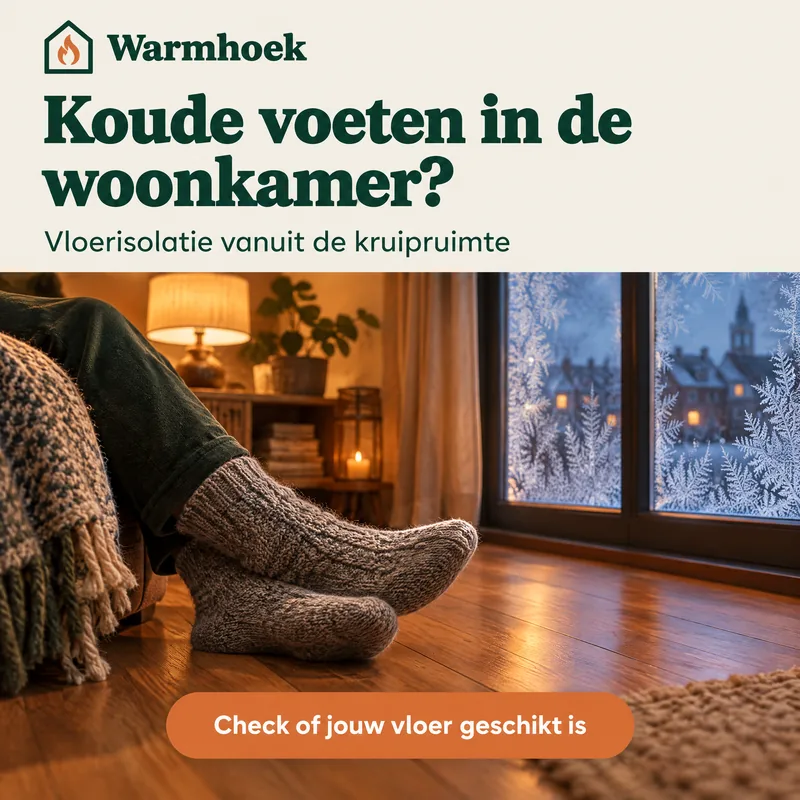
| Cold feet | "Cold floors in the living room?" | Floor insulation | Static, in winter |
| Right order | "Insulate first, then a heat pump. You'll get more out of it." | Insulation, heat pump | Video or carousel |
| State of play | "Hybrid heat pump mandatory? Here's where things stand." | Heat pump | Video with an AI presenter |
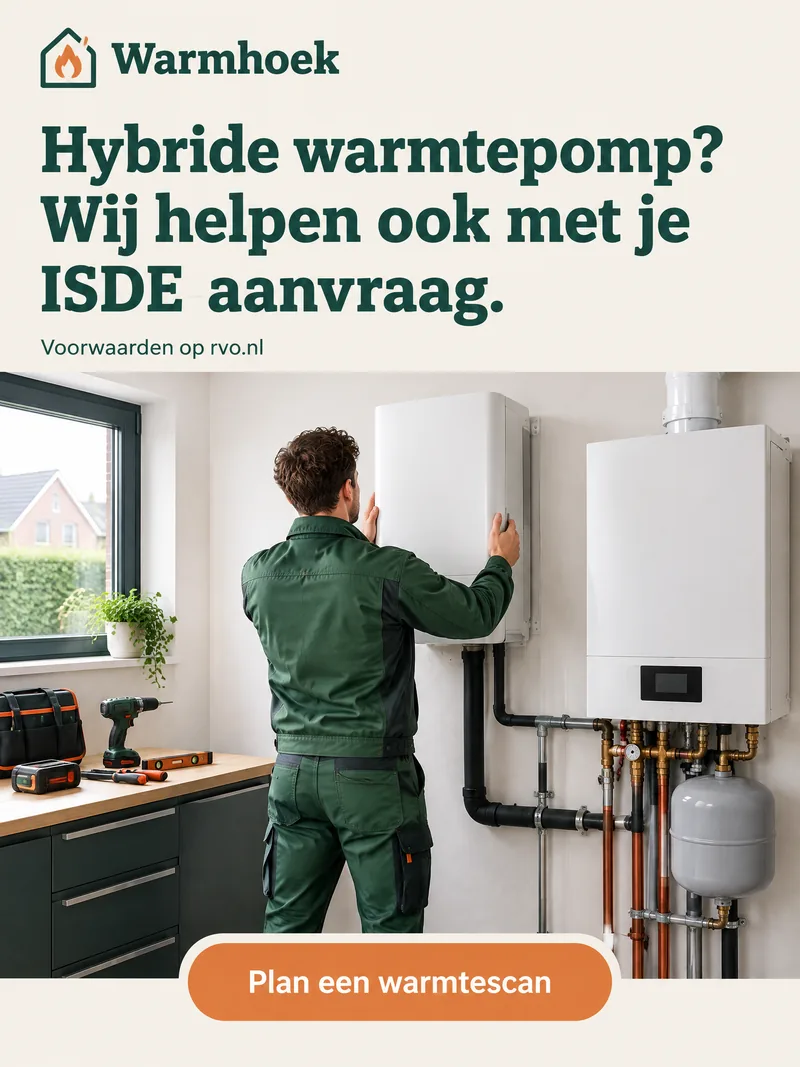
| Subsidy help | "We also handle your subsidy application." | Heat pump, insulation | Static |
| Installation day | "Here's what an installation day with us looks like." | All | Video with real technicians |
| Your street | "These homes near you went first." | All | Carousel of real projects, with consent |
Which format should you use?
- Statics are the quickest: test your offer and headline first.
- UGC with an AI persona works for explaining things, like how net metering works or what happens during a home check. The persona is your company's adviser, never a customer who "saves €800 a year".
- Video with real technicians and real installs builds trust. AI video is fine for explanation, such as heat escaping through an uninsulated roof, but never as proof of work you didn't do.
Below are three examples made with Genly for Warmhoek, a fictional installer near Zwolle in the Netherlands (so the copy is in Dutch).
Budget and measurement: optimise for signed jobs
Genly Leads uses €25 to €50 a day in ad spend as a starting point. Treat that as a rule of thumb, not a guarantee. Meta says an ad set usually delivers stably after about 50 results in a week. At, say, €30 per lead, that's €1,500 a week, which most installers won't reach. So keep it simple: one campaign per product, one ad set, three to five ads.
Measure the whole funnel: lead, reached, visit, quote, signed. A worked example with our own assumptions: you accept €400 in marketing cost per signed heat pump, and 1 in 10 leads signs. Then a lead can cost at most €40. With a CRM and more than about 200 leads a month, Meta's Conversions API for CRM lets the system learn which leads actually become customers.
Rules and pitfalls
- Get subsidies right. In the Netherlands, an eligible (hybrid) heat pump gets at least €500 under ISDE, it must be installed by a company, and the application is due within 24 months of installation (RVO). Solar panels and home batteries are not on the ISDE list (RVO). So never promise "a subsidy on your battery".
- No hard savings promises. Savings depend on the home and its insulation; in a poorly insulated house a hybrid heat pump saves less gas and uses more electricity (Milieu Centraal). The burden of proof is on the advertiser (Dutch Code for Sustainability Advertising). Write "up to" or "in an example home", with the assumptions.
- Stricter green claims across the EU. Since 27 September 2026, the EU directive on empowering consumers for the green transition applies. The Dutch regulator ACM explains that generic claims like "green" or "eco-friendly" now have to meet strict standards, and self-made labels without independent checks are banned (ACM).
- Prices include VAT and unavoidable charges, such as call-out fees (Your Europe).
- An AI persona is never a customer. Since 2 August 2026, realistic AI people must be clearly disclosed as AI, and the Dutch social media advertising code says AI in advertising must not mislead.
- Only call with consent. In the Netherlands, calling consumers to sell requires provable consent; a call list is not proof (ACM). Check this for any leads you buy.
- Advertising financing? Check whether Meta treats your ad as a Special Ad Category for financial products.
How to do it with Genly
- Paste your website. Genly builds your Brand DNA: logo, colours, fonts, services and audience.
- Ask for what you need in plain language. For example: "Make three statics about the end of net metering for homeowners around Zwolle, without savings figures."
- Create statics, AI UGC and video. Statics in your brand style, AI UGC with one of more than 100 personas as your adviser, and videos with models like Seedance, Veo and Kling. In the video editor, one click adds an AI label.
- Let the AI marketing team help. In the AI marketing team, the Ads Researcher tracks what competitors run, and the Media Buyer sets up your campaign paused in your own Meta account. It only goes live after you click.
Genly starts at €39 a month with a 3-day free trial (pricing). Rather hand it off? Genly Leads is built for clients including home energy installers: ads, landing page and follow-up up to the appointment in your calendar, live within 5 working days, in your own Meta account. If qualified leads don't come in during the first 30 days at the recommended budget, the team keeps working at no extra cost.
Frequently asked questions
How much does a solar or heat pump lead cost?
It varies a lot by region, season, product and whether the lead is shared or exclusive. Work backwards: what can a signed job cost in marketing, and how many leads do you need per job?
Are bought solar leads exclusive?
Not always. With shared leads, several installers get the same request. Ask before you buy, and ask how consent to call was recorded.
Can I mention subsidies in my ads?
Yes, if you get them right: which measure, which conditions, and a link to the official source. Don't quote amounts that don't apply to everyone, and don't imply subsidies for products that aren't covered.
Does TikTok work for solar and heat pump installers?
For lead generation, start with Facebook and Instagram, which reach far more homeowners in the Netherlands. TikTok is strong for short behind-the-scenes videos and for recruiting technicians.
Editor
Marlon Bonink
Co-founder of Genly
This article was written by Genly's AI team and reviewed by Marlon before it went live. How we work with AI: AI transparency.